Smart
Lee Kuan Yew said leaders with weak EQ don't last. Then rated himself.
In a 2000 Harvard interview, he explained why he never relied on his own read of people alone
Published
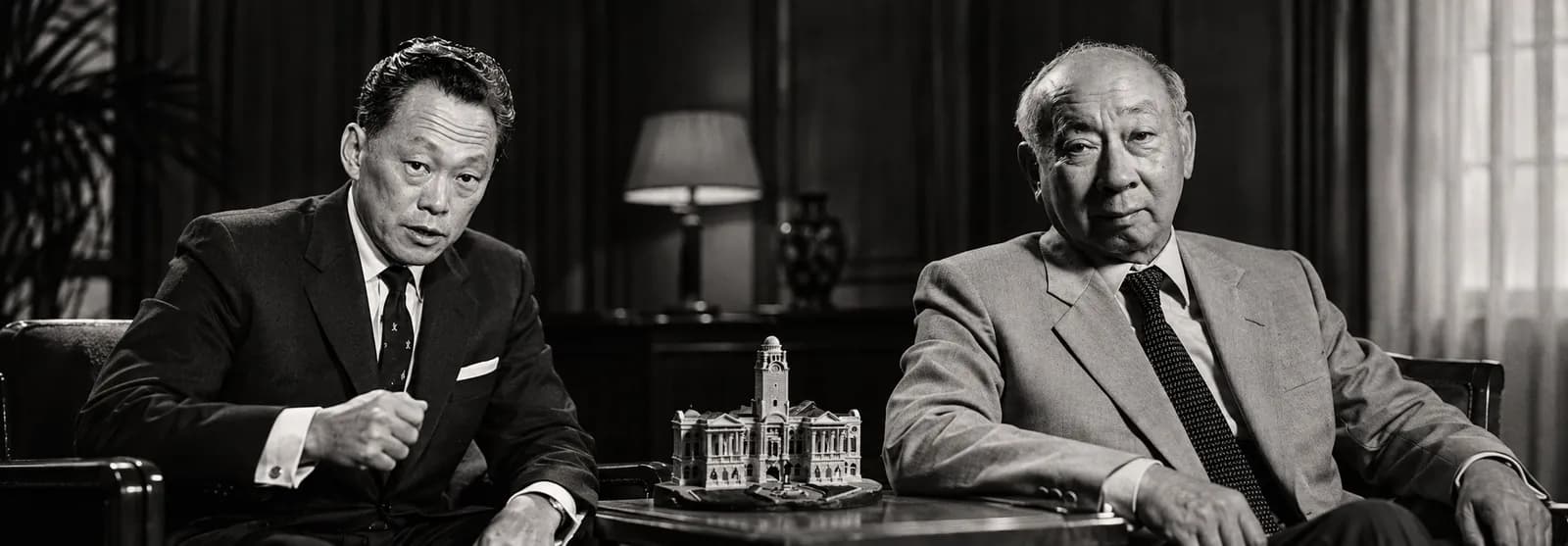
Singapore's founding prime minister Lee Kuan Yew had a blunt view on emotional intelligence: a leader with weak EQ won't last long. He said so in an October 2000 interview at the Harvard Kennedy School. Then he scored his own EQ out of 10.
The interview, Lee Kuan Yew on Leadership: The Harvard Interview, was run by Harvard professors David Gergen, Ron Heifetz, Dean Williams and John Thomas.
- Lee Kuan Yew said no leader can last long with weak emotional intelligence (EQ), because leaders depend on other people to get the job done.
- He gave his own EQ a 7, "maybe eight", out of 10, and gave a colleague who read people better a full 10.
- For jobs that involve leading people, he wanted "enough IQ" plus good EQ. For a lone researcher, he'd pick IQ.
- He didn't trust his own read of people alone. He brought sharper judges of character into his hiring interviews.
What Lee Kuan Yew said about emotional intelligence
Lee raised EQ himself, without being asked. A panellist had asked him to name the traits behind his leadership. He listed being consistent, being determined, and explaining ideas simply.
Then he came to trust. He said he was "fairly good at sensing who I should not trust", and called it "part of the EQ problem".
"I don't think any leader could last for long if his EQ is weak, because you've got to depend on other people to help you do the job," he said.
His reasoning was practical. If you're fooled into trusting people who don't share your goals, he said, "you're in trouble".
"Use a man, don't distrust him"
Lee backed this up with a Chinese saying, 用人不疑,疑人不用. His translation: "Use a man, don't distrust him. If you distrust him, don't use him."
The people he trusted got "total authority" to do the job their way. That only works if you pick the right people first. And picking people is where EQ comes in.
The brilliant deputy who kept picking the wrong people
The panel later asked how Lee balanced IQ and EQ, since he was known for his sharp, rational mind. He answered with a story about Goh Keng Swee, his deputy.
Lee praised Goh's "powerful mind" and "very sharp pen". But Goh kept making mistakes when choosing people. He would read an impressive paper and ask for its writer as his secretary. Six months later, he'd come back to Lee saying the man lacked judgment.
"He's unable to sense and feel a person," Lee said.
The colleagues nobody could fool
Others had the gift. Lee described a former teacher who became a builder and shipbuilder. In his 60s, Lee persuaded him to chair the Public Service Commission (PSC), which recruits civil servants and picks scholarship holders.
"Nobody pulls any wool over his eyes," Lee said. When this man recommended someone, that person turned out to be good.
Then there was Lim Kim San, who invented a machine for processing sago and later built public housing for Lee's government. Lim once shook hands with a former Special Branch officer who had worked against them. He told Lee he recoiled at the feel of the man's palm, and called him an evil man.
"How does he know? I don't know," Lee said. He put it down to body language, the eyes, and a feel for the other person.
So Lee changed how he hired. When interviewing candidates, he sat with colleagues like Lim, who were good at seeing through people. The paper records and test scores were on the table. But the yes or no came from that one-hour conversation.
He gave his own EQ a 7 out of 10
Asked to score himself, Lee said: "I'd give myself seven, maybe eight." The PSC chairman got a 10.
His IQ? "Maybe 120," he guessed, joking that it was probably "tailing off over the years as the neurons die".
So the man who built modern Singapore admitted that someone else read people better than he did. Then he put that person to work.
EQ vs IQ in leadership: it depends on the job
Lee didn't say IQ doesn't matter. He said the right mix depends on the role.
- Research roles: To run a cell and molecular biology institute, he'd pick for IQ, "even if his EQ is not that good", as long as the person would chase a problem to the end. But he called that "an exception".
- Roles that lead people: He wanted "enough IQ" to master the details, plus good EQ to know who to put where, and "who will work with whom". Without a working team, he said, the leader fails, because "he can't do it himself".
A simple rule follows from that: the more of your job is other people, the more your EQ decides your results.
He said it again six years later
The view stuck with him. In a 2006 interview with the Singapore Law Gazette, then Minister Mentor Lee said: "A person with high IQ but no EQ is at a great disadvantage. EQ is essential."
Most of us can't score our own EQ
Here's the hard part. Lee could rate himself a 7 because he had a 10 sitting next to him. Most of us don't. From the inside, friction with certain colleagues just feels like their fault, or ours, with no clear pattern.
That's the gap GoKoach coach Khoo Yin works on. She spent 20 years in corporate communications, building teams, developing talent and leading portfolios. She now holds a Masters in Applied Positive Psychology and is a certified coach.
Her 1:1 sessions are for high performers who are good at the job but drained by the people around it. She uses the Six Seconds Brain Brief Profile to map how your brain is wired, so you can see your own patterns instead of guessing.
[LINK: book a 1:1 session with Khoo Yin on GoKoach]